
Implants

Dr. Dimple Sharma, DDS, and the team at New Hope Dentist understand how much a complete, confident smile matters to your daily life. That’s why we offer dental implants designed to restore both function and appearance, using personalized care and advanced imaging to help you replace missing teeth with a solution built to last.

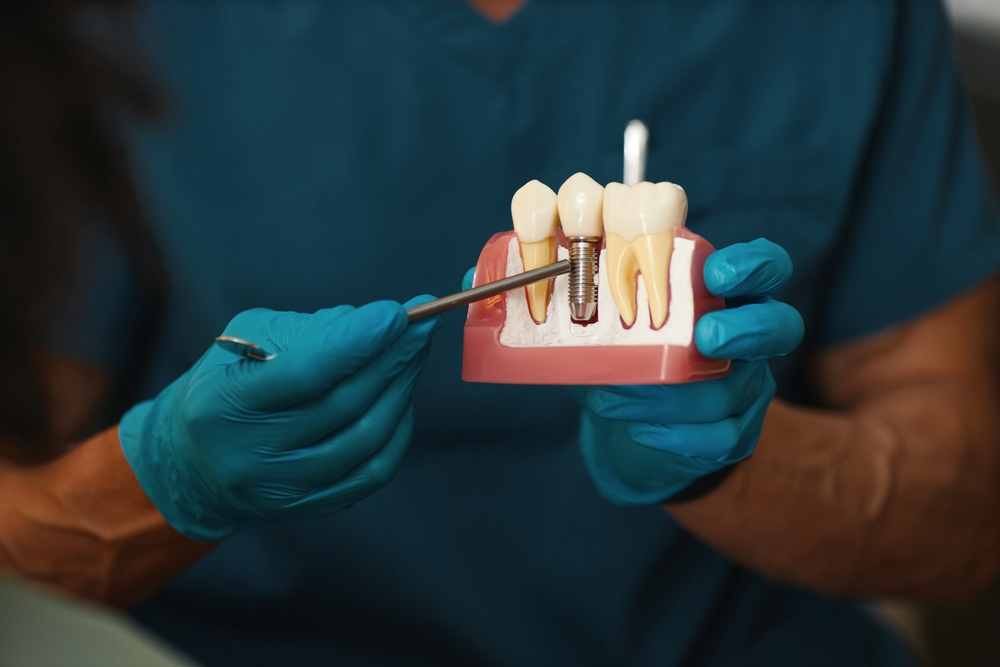
A dental implant is an artificial tooth root, usually made from titanium, that fuses with your jawbone through a process dentists call osseointegration. Implants represent one of the biggest advances in dentistry over the past 40 years, giving patients a stable foundation for a crown, bridge, or denture that looks and functions like a natural tooth.


Online Booking

Meet Dr. Sharma

For implant cases, Dr. Dimple Sharma leads treatment planning personally, mapping out each patient’s imaging before any surgical step begins. A graduate of the NYU College of Dentistry, she opened New Hope Dentist in 2017 after years of hands-on restorative experience across Texas practices, with a particular focus on treatments built to last decades rather than years. She continues coursework specifically on implant materials and surgical techniques to keep pace with the field, and she consults with patients in English, Hindi, or Punjabi so nothing gets lost in translation during a decision this significant.

Learn About Your Doctor!

What are dental implants?

Dental implants are artificial tooth roots, most commonly made from titanium, a biocompatible metal that fuses naturally with the jawbone through a process called osseointegration. Titanium has been the gold standard for decades due to its strength, durability, and long-term success.

Once the implant is fully integrated with the bone, it serves as a stable foundation for a crown, bridge, or denture, restoring both the appearance and function of your natural teeth.

Why choose dental implants?

  • Permanent & Secure – No slipping like dentures
  • Preserve Jawbone & Facial Structure – Prevents bone loss
  • Eat What You Love – Strong bite strength
  • Natural Appearance – Custom-matched restorations
  • No Impact on Nearby Teeth – Unlike dental bridges

What to Expect

  • Consultation and 3D Imaging: We evaluate your oral health and bone structure to determine implant readiness.
  • Implant Placement: Our trusted surgical partners place the implant in the jawbone under local anesthesia.
  • Healing and Osseointegration: Over 3–6 months, the implant bonds with the jawbone.
  • Custom Restoration: We attach your crown, bridge, or denture, custom-crafted for a seamless look.

Am I a candidate?

You may be eligible for dental implants if:

  • You’re missing one or more teeth
  • You’re in good overall health
  • You have healthy gums and enough bone
  • You’re ready for a long-term solution

If bone loss is present, bone grafting may be recommended before implant placement.

Why Patients Trust New Hope Dentist

  • Digital Scanning & Planning – Precise fit and fast turnaround
  • Experienced Restorative Care – We restore your smile after surgery
  • Compassionate Team – Gentle, bilingual, and judgment-free
  • Insurance-Friendly – We accept all PPO/EPPO dental insurance plans and offer financing options

Signs You May Need Implants

If you’re missing one or more teeth, you may already notice changes in how you chew, speak, or feel about your smile. Over time, a space can cause nearby teeth to shift, your bite to feel uneven, and the jawbone beneath the gap to lose density. Implants address each of these concerns at once by replacing both the visible tooth and the root beneath it, which helps stop bone loss before it starts. For many patients, this makes implants the closest match to a natural, fully functioning tooth.

Reassuring Research on Tooth Loss

It helps to know you’re not alone in this. Both partial and total tooth loss among American adults has steadily declined since the early 1970s, thanks to better prevention and treatment options. Modern implant dentistry is a major reason why: peer-reviewed research shows dental implants achieve a 90 to 95 percent success rate over ten years, making them one of the most predictable ways to restore a missing tooth.

When Should You See a Dentist

There’s no need to rush into a decision, but waiting too long can create additional problems. An unreplaced missing tooth can allow neighboring teeth to shift out of place and can lead to bone loss around the gap over time. If you’ve noticed changes in your bite, discomfort while chewing, or a gap that’s bothering you, it’s a reasonable time to schedule a consultation and talk through your options with a dentist.

Speak to a Professional!

Prevention and Aftercare Tips

Protecting your oral health starts long before any procedure and continues well after. Brushing twice daily, flossing, and keeping up with regular dental visits all help preserve your existing teeth and prepare your mouth for a future implant if you need one. After treatment, gentle cleaning around the implant site, avoiding hard or sticky foods during healing, and attending follow-up visits all support long-term success.

Popular Home Remedies and DIY Fixes

It’s common to see DIY dental trends circulating online, from temporary tooth repair kits to natural remedies like oil pulling. These options are often marketed as quick, low-cost fixes for a gap or damaged tooth while you wait to see a dentist.

What the Research Really Shows

Many popular DIY dental trends range from ineffective to potentially harmful. Oil pulling, for example, has no reliable scientific backing for improving oral health, and at-home fixes for missing or damaged teeth can delay proper treatment and allow underlying issues to worsen. A licensed dentist remains the safest way to address a missing tooth long-term.

Our Implant Treatment Process

Evaluating Your Smile and Bone Health

Your process begins with a thorough evaluation of your oral health, gum condition, and bone structure. Detailed imaging helps determine whether you’re a good candidate for implants and identifies concerns, such as bone loss, that may need attention first. You’ll leave this visit with a clear picture of your treatment path.

We Design Your Treatment Plan

Based on your evaluation, Dr. Sharma builds a treatment plan tailored to your specific needs and goals. She considers factors like the number of missing teeth, bone density, and your desired outcome. This personalized approach helps ensure your implant placement is precise and set up for long-term success.

Placing Your Implant with Surgical Precision

Our trusted surgical partners place the implant into the jawbone using local anesthesia for your comfort. The procedure is carefully planned using your imaging to promote accuracy and reduce recovery time. Most patients describe the experience as comparable to a routine tooth extraction.

Restoring Your Smile with a Custom Crown

Once healing and osseointegration are complete, typically after three to six months, your custom crown, bridge, or denture is attached for a natural, seamless finish. Every restoration is shaped and shaded to blend with your surrounding teeth. This final step is what brings your new smile fully to life.

Checking In as Your Implant Settles

Follow-up visits confirm your restoration fits comfortably and functions as expected. Ongoing checkups let us catch any issues early and keep your implant performing well for years ahead. Regular care is what turns a successful placement into a lasting result.

Cost and Insurance Information

Investing in implants doesn’t have to feel financially overwhelming. The figures below reflect general industry averages, not a quote for your specific treatment.

Industry Average Pricing

A single-tooth implant in the U.S. typically costs between $3,000 and $7,000, factoring in the implant post, abutment, and crown. These are national averages only. If you’d like to see how New Hope Dentist has worked to make implants more accessible than many practices, please contact our team to verify exact plans and rates for your situation.

Common Insurance Providers

Roughly seven in ten adults under 65 carried some form of dental coverage as of the most recent federal data, and Delta Dental, MetLife, Cigna, UnitedHealthcare, and Aetna are among the carriers most frequently held by patients nationwide. This list reflects general industry trends, not a guarantee of coverage at our office. To find out if we accept your specific insurance or payment method, please speak with a member of our team.

Speak to a Professional!

Missing Teeth Don’t Have to Be Permanent!

A space in your smile only grows more noticeable, more uncomfortable, and more costly to fix the longer it’s left alone. Dr. Dimple Sharma plans every implant case around detailed imaging of your own jaw, so the fit, function, and look are built for your mouth specifically, not a standard template. Dial 512.259.6577 to set up your consultation with New Hope Dentist, and check out real patient results and implant care tips on our Facebook, Instagram, and X pages.

Online Booking

FAQs

How much are dental implants?

The cost of dental implants varies depending on factors like the number of teeth being replaced, bone health, and whether additional procedures like bone grafting are needed. Most PPO and EPPO insurance plans offer at least partial coverage, which can help lower your out-of-pocket cost. Our team also offers financing options to make treatment more manageable. We recommend scheduling a consultation so we can give you an accurate estimate based on your specific needs.

How long do dental implants last?

With proper care, dental implants can last 20 years or more, and in many cases, they last a lifetime. Their longevity depends on several factors, including your oral hygiene habits, bone health, and whether you smoke or have certain medical conditions. The quality of the implant placement and normal wear on the crown also play a role. Regular checkups help us monitor your implant and catch any concerns early.

Do dental implants hurt?

Most patients experience only mild discomfort during and after the procedure, similar to what you’d feel after a simple tooth extraction. Local anesthesia keeps you comfortable throughout placement, and any soreness afterward is usually manageable with over-the-counter pain relief. Swelling typically subsides within a few days. Our team provides detailed aftercare instructions to help keep your recovery as smooth as possible.

Are dental implants safe?

Yes, dental implants have a long track record of safety and success, backed by decades of research and clinical use. Titanium, the most common implant material, is biocompatible and rarely causes rejection or allergic reactions. Choosing an experienced provider and following aftercare instructions closely both contribute to a safe, successful outcome. We evaluate your health history carefully before recommending implants to confirm you’re a good candidate.

Why no dairy after dental implant?

Avoiding dairy right after surgery isn’t about the implant site itself, but about easing digestion while your body recovers from anesthesia and any prescribed medications. Dairy can sometimes cause stomach discomfort when combined with certain pain relievers or antibiotics. Sticking to soft, bland foods for the first day or two helps keep you comfortable. Your care team will give you specific dietary guidance based on your treatment.

How long do dental implants last?

With proper care, dental implants can last 20 years or more and in many cases, a lifetime.

Lifespan depends on several factors, including oral hygiene, bone health, smoking or medical conditions, the quality of implant placement, and wear on the crown attached to the implant.

Is the procedure painful?

Partial dentures include artificial teeth attached to a base that matches your natural gum color, along with small metal or acrylic clasps that hook around your remaining teeth for support. Some designs use more natural-looking connectors instead of visible metal clasps, depending on your preference. From a normal conversational distance, a well-made partial blends in naturally with the rest of your smile. Most people won’t notice you’re wearing one unless you tell them.

Are dental implants covered by insurance?

Some PPO plans offer partial coverage to help with the cost of dental implants. Our team will help you check your benefits.